


Blog
Pistachio Post-Harvest Care: A Practical Recovery Plan Before Leaf Fall
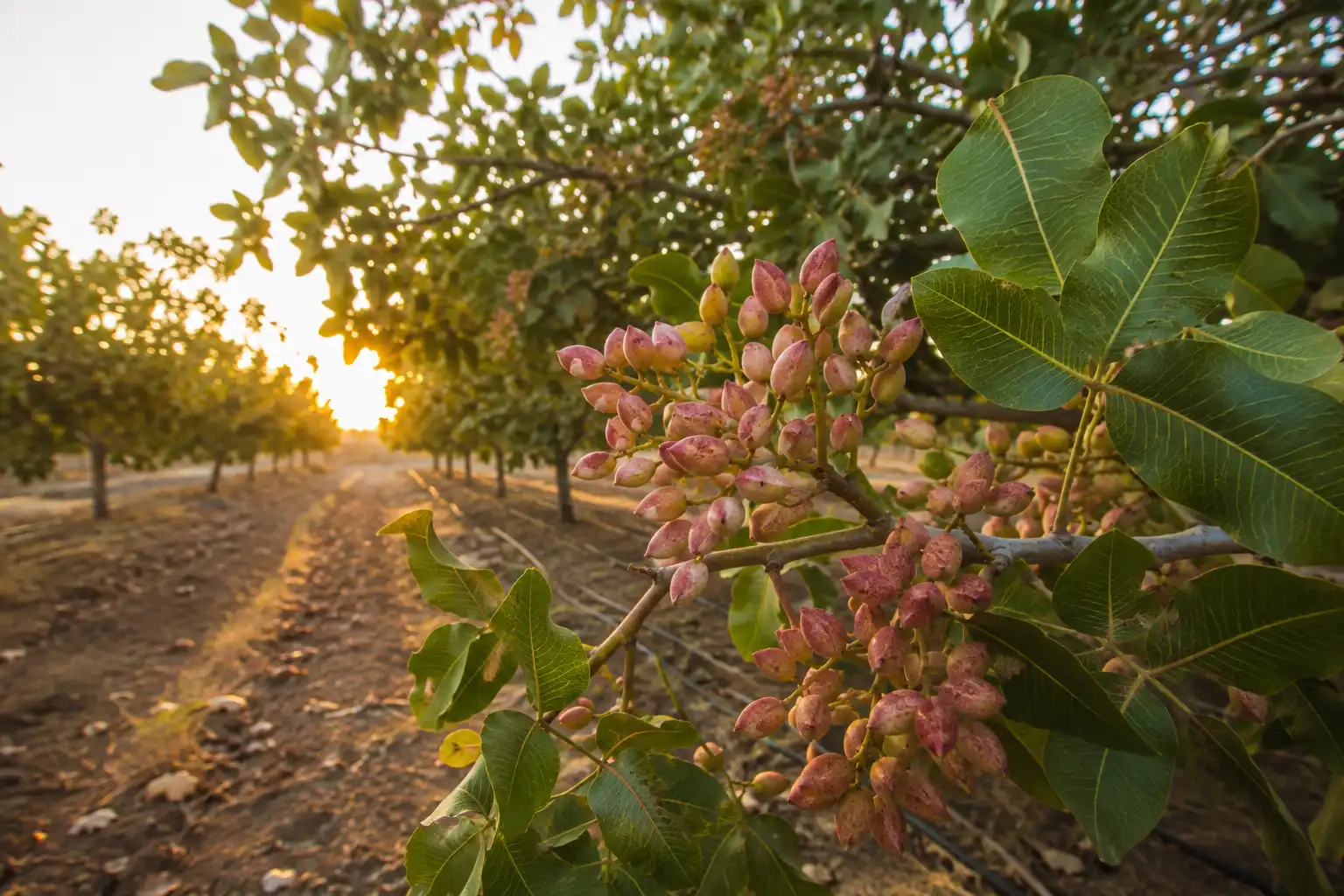
Pistachio Post-Harvest Care: 7 Essential Steps for a Healthier Orchard
Pistachio post-harvest care begins as soon as harvest ends. This recovery window is critical for timely irrigation, leaf analysis, targeted nutrition, bud support, weed control and orchard sanitation before leaf fall.
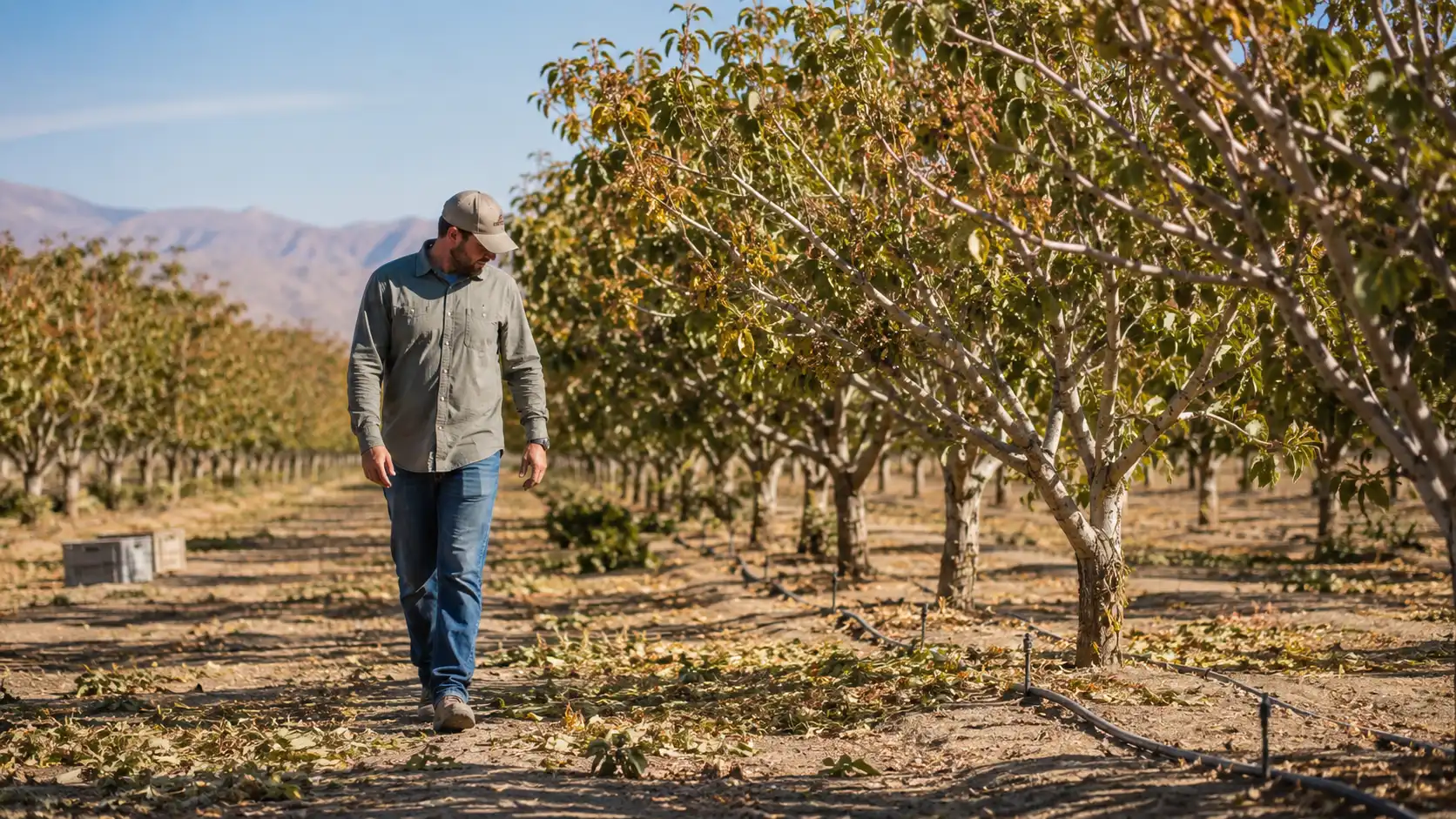
Pistachio Post-Harvest Care in 30 Seconds
A strong pistachio post-harvest care plan starts with irrigation as close to harvest as conditions allow. Next, use leaf analysis, soil conditions and crop load to guide nutrition. Complete justified foliar support while leaves remain green, then control weeds and clean the orchard floor before winter.
Pistachio Post-Harvest Care: 7 Essential Actions
Pistachio post-harvest care is easier to manage when every action has a clear purpose. The seven actions below turn a long list of orchard jobs into a practical decision sequence. The order matters: protect water status first, diagnose the orchard second, and select inputs only after the need is clear.
1. Restore water availability
Pistachio post-harvest care begins with a functioning irrigation system and adequate root-zone moisture. Check emitters, pressure, wetting patterns and obvious dry zones before assuming the block has received enough water.
2. Review analytical data
A reliable pistachio post-harvest care decision should combine leaf analysis with soil data, irrigation-water quality, crop load and visible orchard variation. A single symptom is rarely enough to select a fertilizer responsibly.
3. Protect active roots
Where fine roots are active, pistachio post-harvest care can support diagnosed nutrient needs through a suitable soil or fertigation strategy. The opportunity is useful only when irrigation distribution and root-zone conditions are also suitable.
4. Correct only confirmed limitations
The objective of pistachio post-harvest care is not to apply the largest number of products. It is to remove the orchard’s real limiting factors with the correct source, rate, timing and application method.
5. Use green leaves while they remain functional
If zinc, boron or another foliar input is justified, pistachio post-harvest care should not be postponed until the canopy is already yellow. Green leaf area is needed for useful photosynthesis and effective foliar uptake.
6. Clean and monitor the orchard floor
Complete pistachio post-harvest care includes weeds, residues, unharvested material and possible pest shelters. Record problem zones now so they can be monitored and managed before they become larger next-season issues.
7. Record the response and prepare next season’s plan
The final pistachio post-harvest care action is documentation. Record harvest date, crop load, irrigation timing, laboratory results, products, rates, application dates, weather and visible response. These records allow the next program to be based on orchard history rather than memory. They also help the technical team compare blocks, identify repeated deficiencies and avoid unnecessary applications.
Pistachio post-harvest care must be adjusted for country, climate, cultivar, tree age, crop load, salinity, soil texture, irrigation method and laboratory results. Use this guide as a decision framework, not as a universal rate sheet.
Why Pistachio Post-Harvest Care Matters
Pistachio post-harvest care matters because pistachio trees remain physiologically active after the crop is removed. Healthy green leaves continue photosynthesis, while the root system can remain active and the tree begins rebuilding carbohydrate and nutrient reserves for winter survival and the next spring flush.
Harvest operations may also impose physical stress through shaking, branch damage and soil traffic. The goal after harvest is therefore not aggressive growth; it is controlled recovery—maintaining functional leaves, supporting roots and correcting confirmed deficiencies before leaf fall.
Pistachio Post-Harvest Care: The 7-Step Timeline
Use tree condition and phenology—not the calendar alone—to decide timing. The sequence below keeps the most time-sensitive operations first.
Immediately after harvest
Inspect harvest damage, clean the tree rows and schedule irrigation at the nearest suitable opportunity.
While leaves are still green
Review leaf-analysis results and decide whether a targeted foliar program is justified.
During active root growth
Use the period of renewed fine-root activity to support diagnosed nutrient needs through an appropriate soil or fertigation strategy.
Before leaf fall
Finish justified bud-support applications before leaf absorption and photosynthetic capacity decline.
Before winter
Control weeds, remove infected residues where appropriate and record orchard observations for next season’s plan.
Step 1: Pistachio Post-Harvest Care Starts with Irrigation
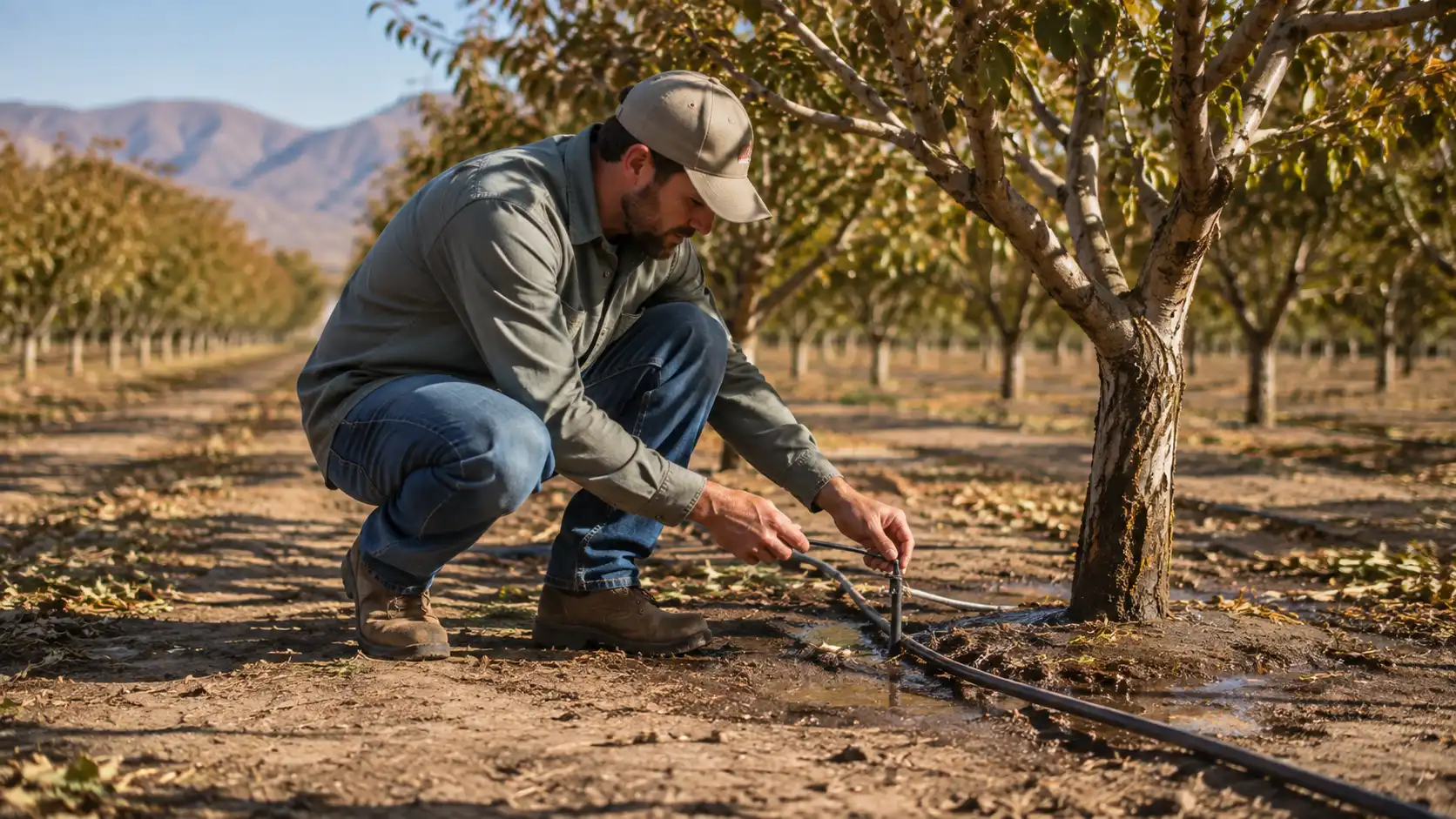
In any pistachio post-harvest care program, irrigation should be the first operational priority after pistachio harvest. Trees still need water to maintain leaf function, sustain post-harvest metabolism and support root activity. Where possible, coordinate the harvest schedule with the irrigation rotation so the waiting period is minimized.
Check actual soil moisture
Confirm moisture at the active root zone and compare several locations, especially in variable or saline blocks.
Avoid blind over-irrigation
The objective is recovery, not waterlogging. Adjust duration to soil texture, salinity, weather and system performance.
No universal irrigation duration is provided here. Orchard age, soil texture, irrigation-water quality, salinity and weather can change the correct volume substantially.
Step 2: Use Leaf Analysis Before Choosing Fertilizers
Pistachio post-harvest care should be diagnosis-led. A leaf analysis—commonly completed earlier in the season—can prevent both under-correction and unnecessary fertilizer cost. Compare the laboratory results with visible symptoms, crop load, soil analysis, irrigation-water quality and the orchard’s previous response.
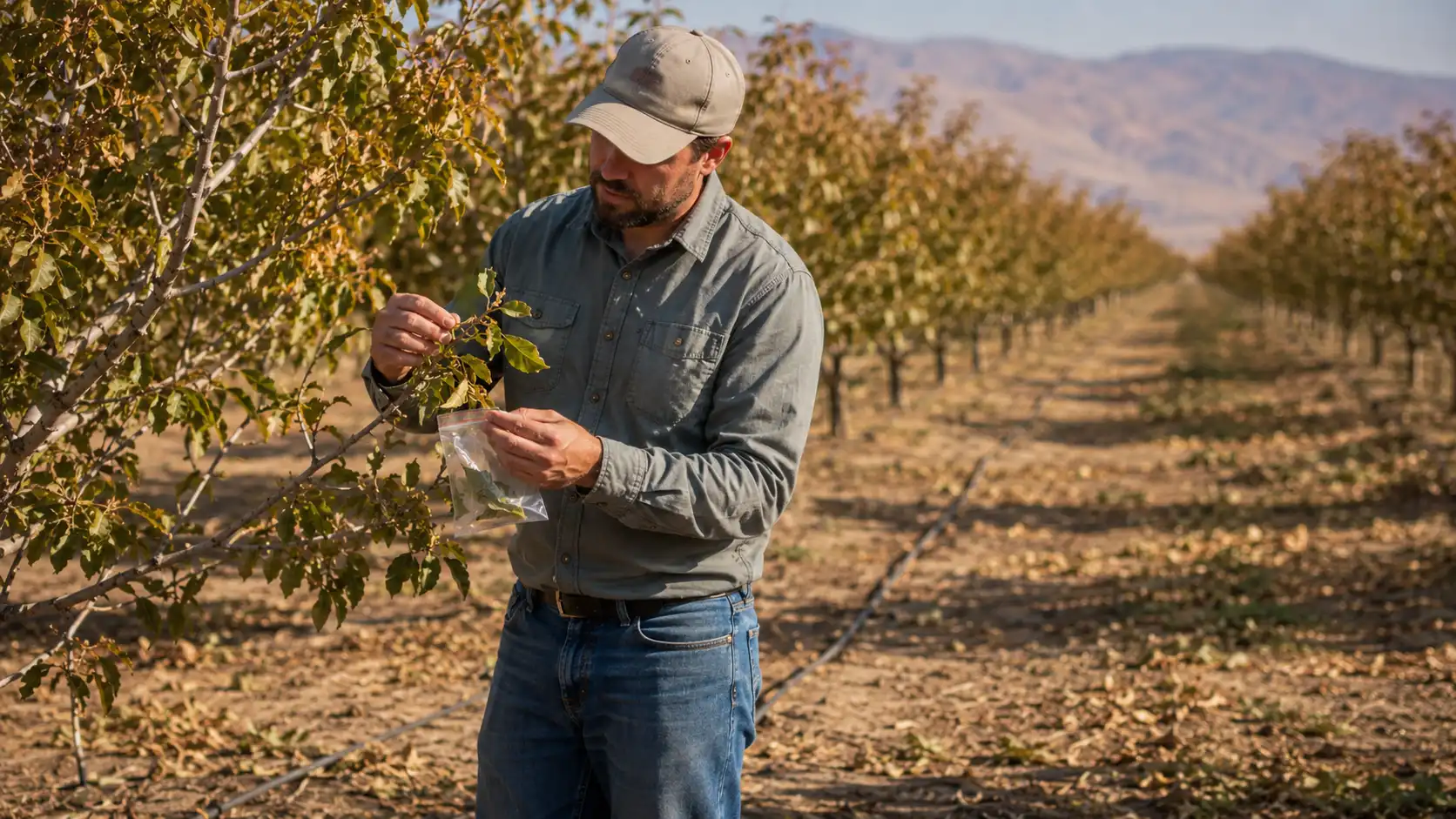
Start with the nutrient need, then select the source, concentration, application method and timing. A product is relevant only when it matches the diagnosis and is compatible with the orchard program.
| Nutrient or group | Why it may matter after harvest | Decision rule |
|---|---|---|
| Calcium | Young roots and newly formed absorbing surfaces can provide an opportunity for calcium uptake during active root growth. | Use only after reviewing tissue results, soil conditions, source compatibility and application method. |
| Zinc & boron | These micronutrients are commonly considered in bud-support and fruit-set programs when deficiency is confirmed. | Do not delay a justified foliar treatment until leaves have lost effective green area. |
| Iron, manganese & copper | These elements support multiple metabolic and photosynthetic processes, but visible symptoms alone may be misleading. | Choose single-element or combined sources according to analysis and compatibility. |
| Nitrogen | A diagnosed need may be part of the recovery plan, especially after a heavy crop. | Avoid excessive late nitrogen that may disrupt hardening or create unwanted growth. |
| Phosphorus | The source material emphasizes that most phosphorus planning should not be postponed until after harvest. | Do not apply routinely. Correct only a diagnosed need within a complete seasonal phosphorus strategy. |
| Potassium | May be included in a broader post-harvest or bud-support program when orchard analysis shows a need. | Account for soil salinity, existing potassium levels and the rest of the nutrient program. |
Data Needed for a Pistachio Post-Harvest Care Recommendation
A useful recommendation requires more than the crop name. Before requesting products or a bulk quotation, prepare the information below. This makes pistachio post-harvest care safer, faster and more relevant to the actual orchard.
| Information | Why it matters | What to send |
|---|---|---|
| Location and climate | Timing changes with temperature, harvest date and leaf-fall pattern. | Country, province, elevation and typical first-frost period. |
| Orchard profile | Young and mature trees may have different priorities and root-zone volumes. | Area, cultivar, rootstock, age, spacing and expected yield. |
| Irrigation system | Source selection and application method depend on distribution and water quality. | Drip, microsprinkler, flood or other method; irrigation interval and emitter information. |
| Laboratory analysis | Pistachio post-harvest care should correct measured needs rather than assumptions. | Recent leaf analysis, soil analysis and irrigation-water analysis. |
| Current symptoms | Photos and block patterns help separate local problems from whole-orchard issues. | Clear photos, affected percentage, symptom location and when it began. |
| Recent applications | Compatibility, nutrient totals and repeated applications must be reviewed. | Product names, guaranteed analysis, rates, dates and application method. |
When these details are available, the pistachio post-harvest care discussion can focus on the orchard’s real constraints. When they are missing, the correct first step may be additional sampling or system inspection rather than immediate product selection.
Step 3: Match Nutrition to the Fine-Root Growth Window
Pistachio post-harvest care becomes more effective when it is aligned with root activity. In many pistachio-growing regions, a renewed period of root growth occurs from late summer into early autumn. The original orchard guidance identifies approximately mid-September to mid-October as an important window in its local context. For international use, confirm the equivalent period through soil temperature, root observations and local phenology rather than relying on dates alone.
More fine roots can improve the tree’s capacity to absorb water and nutrients, but this does not justify applying every nutrient. The greatest value of the root window comes from matching a confirmed deficiency with a suitable source and a functional irrigation system.
Step 4: Complete Foliar Support While Leaves Are Functional
In pistachio post-harvest care, foliar timing matters. During crop filling, a large share of the tree’s photosynthates is directed toward kernel development. After harvest, vegetative and reproductive buds may benefit from targeted support—particularly where analysis has identified zinc or boron deficiency.
Some programs combine readily available potassium or phosphorus sources with zinc and boron. This should not be treated as a fixed recipe. Product selection and tank mixing must account for leaf-analysis results, water quality, product labels, compatibility and local agronomic advice.
As leaves age and lose green area, photosynthesis and foliar uptake decline. If an application is justified, complete it while the canopy remains active and weather conditions are suitable.
Steps 5 and 6: Control Weeds and Improve Orchard Sanitation
Pistachio post-harvest care also includes the orchard floor. Autumn weed control and orchard sanitation can reduce competition, limit the soil seed bank and remove potential shelters for overwintering pests. Plant residues may also allow some pathogens or pest stages to persist into the next season.
Do this
- Remove fallen crop residues and damaged plant material from tree rows where needed.
- Control weeds before they replenish the seed bank.
- Inspect the orchard floor for pest shelters and disease-prone debris.
- Coordinate sanitation with the next irrigation and field operation.
Avoid this
- Leaving weeds unmanaged until spring.
- Assuming all residues are harmless.
- Using a pre-emergence herbicide without checking label, soil and weather requirements.
- Burning residues where local law or safety conditions prohibit it.
7 Pistachio Post-Harvest Care Mistakes to Avoid
1. Treating harvest as the end of the season
The tree continues to photosynthesize, absorb nutrients and rebuild reserves after the crop is removed.
2. Waiting too long to irrigate
Delayed water can shorten the useful recovery period and reduce leaf and root function.
3. Copying another orchard’s fertilizer plan
Crop load, soil, water, salinity, root health and nutrient status differ from block to block.
4. Applying phosphorus automatically
The source guidance specifically warns against postponing the whole phosphorus program until after harvest.
5. Spraying after leaf function has declined
Late applications may provide less value when green area and absorption capacity have already fallen.
6. Ignoring weeds and orchard residues
Unmanaged orchard floors can increase weed pressure and provide overwintering sites for pests or pathogens.
Pistachio Post-Harvest Care Checklist
Use this checklist during the orchard walk. Your selections are saved in this browser.
Orchard recovery actions
Related Products for Pistachio Post-Harvest Care
These products may be relevant to nutrient needs discussed in this pistachio post-harvest care guide. They are not a universal post-harvest package. Select them only after analysis, compatibility checks and a crop-specific recommendation.
Calcium Boron Chelate Fertilizer
A targeted option when the orchard program calls for readily available calcium and boron during a critical growth or bud-support stage.
Chelate FMZ
A combined micronutrient source to evaluate when analysis indicates iron, manganese or zinc limitations in the recovery program.
Potassium Phosphite Fertilizer
A specialized potassium-phosphite input to consider only where the agronomic program and crop-health strategy specifically justify it.
Zinc Sulfate Fertilizer
A single-nutrient option for diagnosed zinc deficiency where the source, concentration and application method fit the orchard conditions.
Need a post-harvest fertilizer recommendation or bulk quotation?
Send the Kimia Lagon team your country, orchard area, tree age, irrigation method, water analysis, soil analysis and recent leaf-analysis report. The more complete the data, the more useful the product recommendation can be.
Technical References for Pistachio Post-Harvest Care
For broader orchard-management context, review the University of California Agriculture and Natural Resources guidance on pistachio nutrients and fertilization. It emphasizes orchard-specific fertilizer programs, leaf analysis and long-term records. For sanitation and pest-management actions, consult the UC IPM pistachio postharvest program.
These references support a central principle of pistachio post-harvest care: decisions should be based on orchard data, local conditions and an integrated seasonal program. Product labels and local regulations remain mandatory for every application.
Pistachio Post-Harvest Care FAQ
In a pistachio post-harvest care plan, irrigation should be the first operational priority, scheduled as close to harvest as orchard rotation and soil conditions allow.
No. Pistachio post-harvest care must follow leaf analysis, soil and water conditions, crop load, tree age, salinity and the orchard’s previous response.
If a spray is justified, it should be completed while leaves retain useful green area and weather permits effective uptake. Do not wait until the canopy is already yellow and senescing.
No. The source guidance warns against postponing the orchard’s entire phosphorus program until after harvest. Apply phosphorus only where analysis and the seasonal strategy justify it.
Weeds and plant residues may increase the seed bank or provide overwintering sites for pests and pathogens. Timely sanitation reduces unmanaged risk before the next season.
